













Síguenos en Instagram
Más que una empresa de actividades al aire libre.

@sawyerproducts
Follow us on Instagram










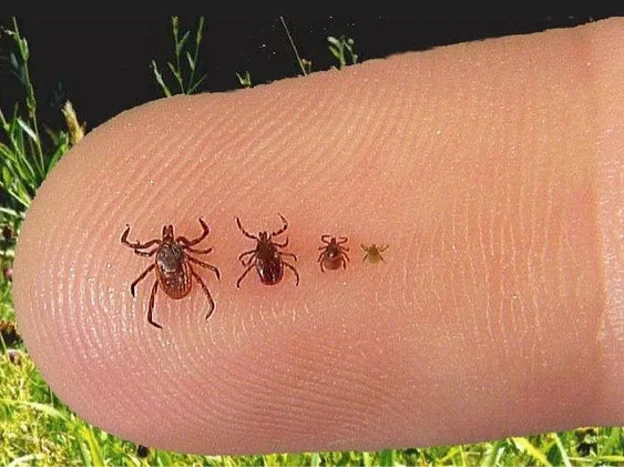
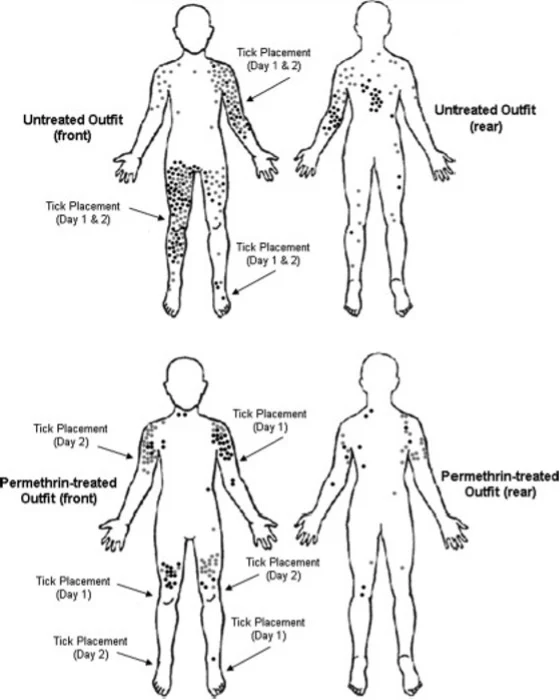
The number of tick bites received by individuals wearing either permethrin-treated or untreated summer clothing was compared during a controlled study.
Watch videoArthropod-borne infections significantly impact human populations, from worldwide epidemics of mosquito-transmitted malaria, yellow fever, dengue fever, and filariasis to more regional disease foci of Lyme borreliosis vectored by ixodid ticks. Significant resources, including funding, research, and human efforts, are dedicated to eradicating, or at least reducing, the impact of these infections. Extensive global and local programs instituted by agencies such as the World Health Organization and Centers for Disease Control and Prevention have broad-reaching integrated pest management approaches focusing on education, vector habitat reduction, indoor residual spraying, as well as significant public health regulatory and legislative frameworks (WHO 2004). In addition to these vector control strategies, people use a variety of techniques to protect themselves from disease-causing vectors; and these methods vary significantly depending on geographic location and specific arthropod pest. Among these personal protection strategies, insect repellents represent one of the first lines of defense against attacks by blood-feeding arthropods and the diseases they can transmit. The most desirable repellents are ones that are less toxic to humans, effective against a broad spectrum of arthropods, long lasting, and cost effective.

Arthropod-borne infections significantly impact human populations, from worldwide epidemics of mosquito-transmitted malaria, yellow fever, dengue fever, and filariasis to more regional disease foci of Lyme borreliosis vectored by ixodid ticks. Significant resources, including funding, research, and human efforts, are dedicated to eradicating, or at least reducing, the impact of these infections. Extensive global and local programs instituted by agencies such as the World Health Organization and Centers for Disease Control and Prevention have broad-reaching integrated pest management approaches focusing on education, vector habitat reduction, indoor residual spraying, as well as significant public health regulatory and legislative frameworks (WHO 2004). In addition to these vector control strategies, people use a variety of techniques to protect themselves from disease-causing vectors; and these methods vary significantly depending on geographic location and specific arthropod pest. Among these personal protection strategies, insect repellents represent one of the first lines of defense against attacks by blood-feeding arthropods and the diseases they can transmit. The most desirable repellents are ones that are less toxic to humans, effective against a broad spectrum of arthropods, long lasting, and cost effective.
Arthropod-borne infections significantly impact human populations, from worldwide epidemics of mosquito-transmitted malaria, yellow fever, dengue fever, and filariasis to more regional disease foci of Lyme borreliosis vectored by ixodid ticks. Significant resources, including funding, research, and human efforts, are dedicated to eradicating, or at least reducing, the impact of these infections. Extensive global and local programs instituted by agencies such as the World Health Organization and Centers for Disease Control and Prevention have broad-reaching integrated pest management approaches focusing on education, vector habitat reduction, indoor residual spraying, as well as significant public health regulatory and legislative frameworks (WHO 2004). In addition to these vector control strategies, people use a variety of techniques to protect themselves from disease-causing vectors; and these methods vary significantly depending on geographic location and specific arthropod pest. Among these personal protection strategies, insect repellents represent one of the first lines of defense against attacks by blood-feeding arthropods and the diseases they can transmit. The most desirable repellents are ones that are less toxic to humans, effective against a broad spectrum of arthropods, long lasting, and cost effective.
Más que una empresa de actividades al aire libre.

