
















Síguenos en Instagram
Más que una empresa de actividades al aire libre.

@sawyerproducts
Follow us on Instagram












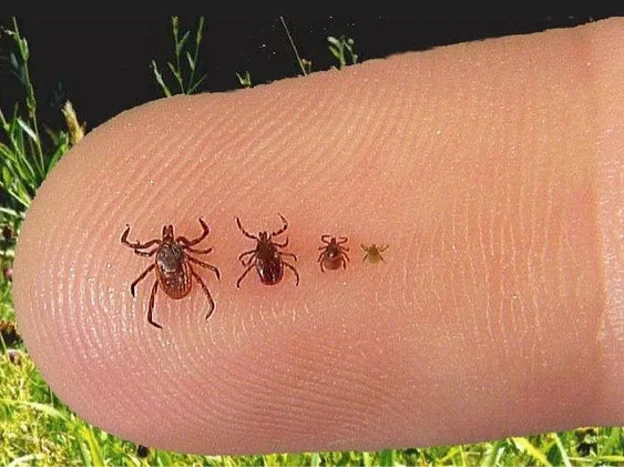
Five types of ticks we likely have present in the county and many parts of Ohio.
Watch videoI recently became disheartened after sending a bunch of ticks to a lab to get identified, and they confirmed what I feared: We have the Asian longhorned tick in Ohio’s Morgan County.
If I am correct, that makes five types of ticks we likely have present in the county and many parts of Ohio. Ticks can give us Lyme disease, anaplasmosis, Rocky Mountain spotted fever, and a disease that makes us allergic to red meat.
The Asian longhorned tick, not to be confused with the Asian longhorned beetle, was found last year in a couple of Ohio counties, and the populations of ALT became so high on some cows that they died.
The good news is that there is a team of professionals from Ohio State University, the Ohio Department of Agriculture, the Ohio Department of Health and USDA that is on top of this and has been responsive.
What do we know? The ticks are asexual, meaning they do not need a mate to reproduce. Each tick can lay up to 2,000 eggs. They move slowly, so the spread is very slow unless they “hitch a ride” on humans, animals or equipment. In fact, farms next to an infested field or another field on the same farm over the past year have not seen much spread.


I recently became disheartened after sending a bunch of ticks to a lab to get identified, and they confirmed what I feared: We have the Asian longhorned tick in Ohio’s Morgan County.
If I am correct, that makes five types of ticks we likely have present in the county and many parts of Ohio. Ticks can give us Lyme disease, anaplasmosis, Rocky Mountain spotted fever, and a disease that makes us allergic to red meat.
The Asian longhorned tick, not to be confused with the Asian longhorned beetle, was found last year in a couple of Ohio counties, and the populations of ALT became so high on some cows that they died.
The good news is that there is a team of professionals from Ohio State University, the Ohio Department of Agriculture, the Ohio Department of Health and USDA that is on top of this and has been responsive.
What do we know? The ticks are asexual, meaning they do not need a mate to reproduce. Each tick can lay up to 2,000 eggs. They move slowly, so the spread is very slow unless they “hitch a ride” on humans, animals or equipment. In fact, farms next to an infested field or another field on the same farm over the past year have not seen much spread.
I recently became disheartened after sending a bunch of ticks to a lab to get identified, and they confirmed what I feared: We have the Asian longhorned tick in Ohio’s Morgan County.
If I am correct, that makes five types of ticks we likely have present in the county and many parts of Ohio. Ticks can give us Lyme disease, anaplasmosis, Rocky Mountain spotted fever, and a disease that makes us allergic to red meat.
The Asian longhorned tick, not to be confused with the Asian longhorned beetle, was found last year in a couple of Ohio counties, and the populations of ALT became so high on some cows that they died.
The good news is that there is a team of professionals from Ohio State University, the Ohio Department of Agriculture, the Ohio Department of Health and USDA that is on top of this and has been responsive.
What do we know? The ticks are asexual, meaning they do not need a mate to reproduce. Each tick can lay up to 2,000 eggs. They move slowly, so the spread is very slow unless they “hitch a ride” on humans, animals or equipment. In fact, farms next to an infested field or another field on the same farm over the past year have not seen much spread.
Más que una empresa de actividades al aire libre.

